Radon Mitigation for Split-Levels, Tri-Levels and Crawl Spaces in Denver
Radon mitigation on a split-level or a crawl space house is a matter of reaching every patch of ground the home sits on. A ranch over one basement may need a single pipe; a tri-level over a basement, a slab and a crawl may need three connections to one fan.
EPA says a home with a basement under one part and a slab or crawl space under the rest may need a combination of methods. Suction under concrete runs $800–$2,500 and a sealed crawl space sheet with suction $800–$3,000 (Bob Vila, 2022).
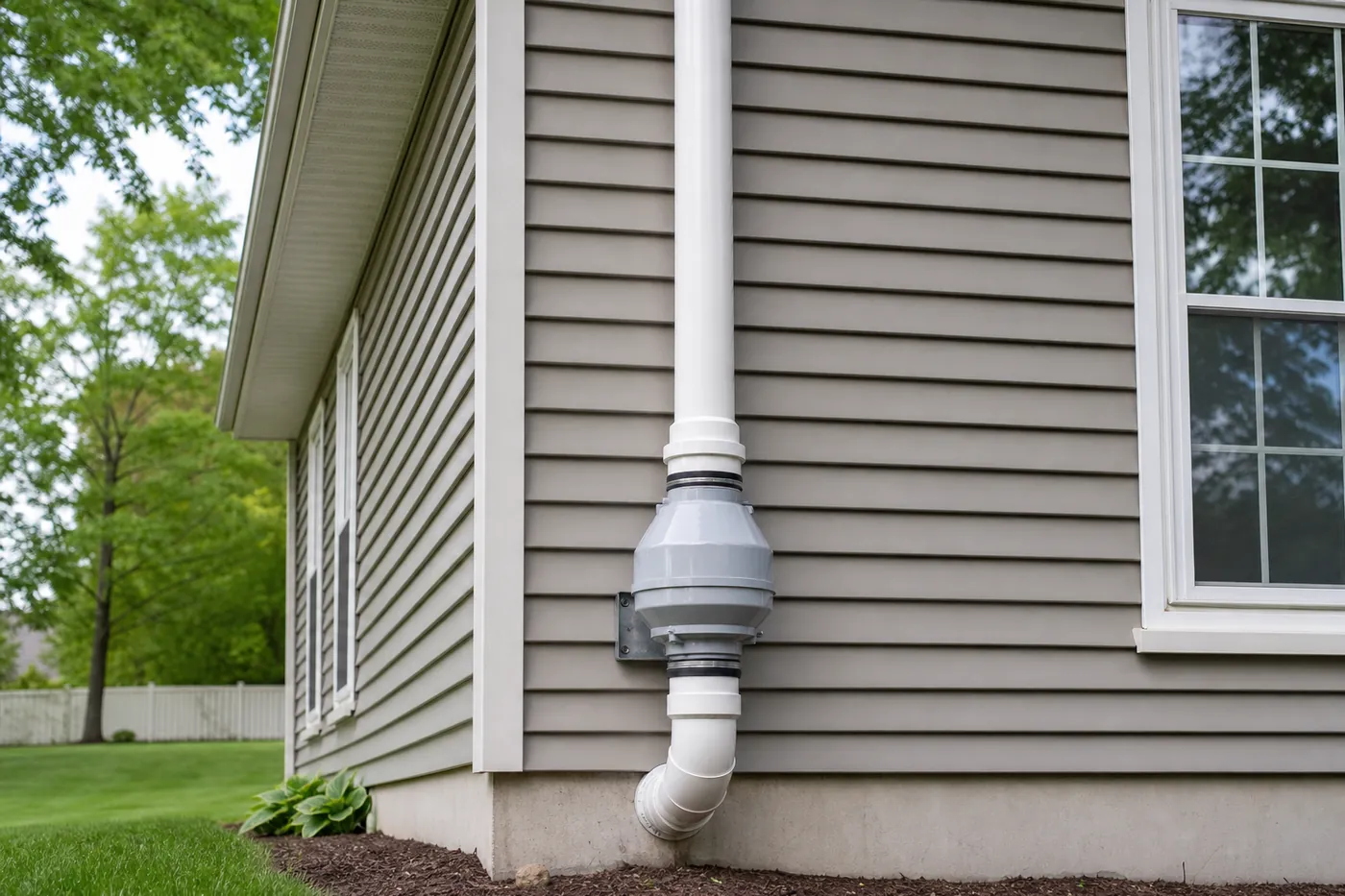
Why does radon mitigation on a split-level need more than one method?
Radon follows the easiest path in. CDPHE lists the gap between basement walls and the slab, foundation cracks, sump and drain openings, plumbing penetrations and crawl spaces among the usual routes. A split-level or tri-level can have all of them in one house: a basement under the bedroom wing, a slab under the family room and a dirt crawl behind a short wall. Pulling suction under one section does little for the others if gravel, footings or soil keep the vacuum from reaching them, so each area is tested and planned on its own.
Sub-slab or sub-membrane: which area gets which?
- Concrete floors (basement or slab): active sub-slab suction, which EPA calls the most common and usually the most reliable method. A pipe through the floor draws from the crushed rock or soil below, and often one suction point is enough.
- Dirt or gravel crawl spaces: sub-membrane suction. The ground is covered with plastic sheeting (CDPHE cites 6-mil poly) sealed at the seams and walls, and a pipe draws from beneath it. EPA calls this the most effective method for crawl space homes.
- Fan-only crawl space suction: EPA rates drawing air straight out of the crawl as less favorable; it can raise energy costs and needs care with fuel-burning appliances.
Where can the fan and the exhaust pipe go?
EPA's rules for any system: the fan must not sit in or below a livable area, so it goes outdoors, in the garage or in the attic, and the exhaust must vent above the roof surface, 10 feet or more above the ground, and at least 10 feet from windows, doors or other openings unless it ends at least 2 feet above them. A gauge or alarm must show whether the fan is pulling. A careful specialist checks the gutter line, nearby windows and the attic before choosing a route.
Turning a Denver crawl space into a basement
Digging out a crawl space to gain a basement brings radon into the permit. The 2025 Denver Residential Code applies its radon control appendix to basement additions converted from existing crawl spaces, including a soil gas collection mat looped under the new slab within 18 inches of the foundation walls, and a vent pipe with space for a future fan outside the living area. For a house that keeps its crawl space, prices for each method are in the Denver radon mitigation cost guide.
Questions homeowners ask
Can one radon fan serve both the basement and the crawl space?
Often it can. EPA describes combined systems for homes with more than one foundation type, and a specialist will usually try to tie suction points from the slab and the sheet in the crawl to a single fan. Whether that works depends on airflow tests and pipe routes in your house, so ask how each area will be reached before you approve a design.
Where does your radon question start?
A number from a test, a lease, a closing, or a house with a crawl space you are unsure about: any of these is enough to begin. One independent radon specialist who works in the Denver area reads the request and gets in touch about next steps.